Water! is turned on
January 28, 2013, by Kathryn Summerwill
Water! is turned on
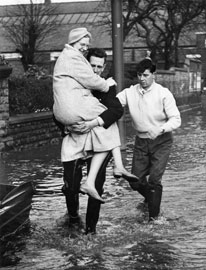
Water is an essential part of our everyday life, but most of us take the ability to turn on taps and flush away waste for granted. Water also has the power to destroy, which we were reminded of recently when floods caused damage and disruption to our local communities.
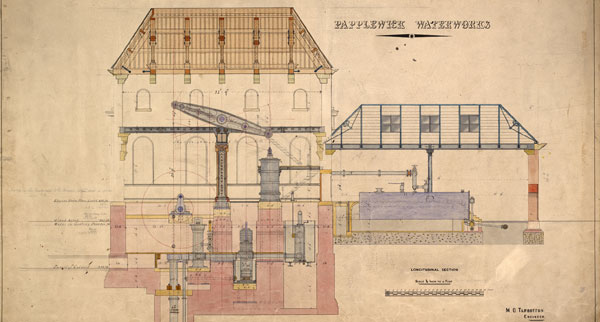
A new exhibition, Water!, opened at the Weston Gallery, Lakeside Arts Centre, University Park on 25th January. It tells the story of how water resources have been harnessed and exploited, particularly within the city of Nottingham. The exhibition draws on a wealth of evidence in the water archives held by the University’s Manuscripts and Special Collections, and has been curated by assistant archivist Kathryn Summerwill.
On display in the gallery are photographs and pamphlets relating to the major civil engineering work involved in laying mains water pipes and sewers, and maintaining flood defences. Shown for the first time in public are a series of original plans of the temporary village of Birchinlee in the Peak District, built after 1902 for the workers employed in building the Howden Dam.
Flooding in Bulwell, 1960. Courtesy of the Nottingham Post Group
The central exhibition case contains photographs of the 1932 and 1947 floods in Nottingham, and plans and documents relating to the subsequent construction of the Nottingham Flood Prevention Scheme. Visitors can also find out about the School of Geography’s meteorological station in University Park, which closed in 1981, and see one of the rainfall gauges which was monitored every day by volunteers, whatever the weather!
From the Hatfield Chase Corporation which began draining marshy ground in north Nottinghamshire in the seventeenth century, to the Severn Trent Water Authority, which had responsibility for the entire water cycle in the Midlands in the 1970s and 1980s, the exhibition provides a glimpse into the extraordinarily wide variety of material held at the University, and a fascinating insight into the water infrastructure created by the Victorians and Edwardians, which is still the basis of Nottingham’s water supply today.
The exhibition will be open until Sunday 19th May and a series of lunchtime talks are open to the public. If you want to know more about the exhibition or the historic collections that are held by the University, contact staff at Manuscripts and Special Collections at mss-library@nottingham. ac. uk.
Find out more!
- You can browse our Water Resources – a series of web pages all about the water archives held by the University.
- A series of photographs from the Trent River Authority’s Engineer’s Department have been digitised and are available on the Historic Collections Online resource on the Manuscripts and Special Collections website, under the heading ‘Landscape and Water Engineering’.
- Some of the collections have only recently been catalogued, with the support of The National Archives Cataloguing Grant Programme. Previous blog posts by project archivist Sarah Colborne document the progress of the Water Records project which finished last year.