How to do things with GIFs: Some musings on online science communication
January 24, 2014, by Brigitte Nerlich
How to do things with GIFs: Some musings on online science communication
Some weeks ago my son said to me: “Mum, you should write a blog post about GIFs”. As I am a bit of a techno-culture-laggard, I asked him what these things were. He showed me a few and they made me laugh. They also made me think. Images, GIFs, infographics, short videos and so on have become an integral part of our increasingly multi-modal conversations on the web and part of our digital lives. They need to be studied by communication researchers and digital sociologists. What do they add to digital conversations? What are their functions? How do they compare to the use of emoticons? How do they function locally and globally?… How do they make science public and how are they used to talk about science in public?
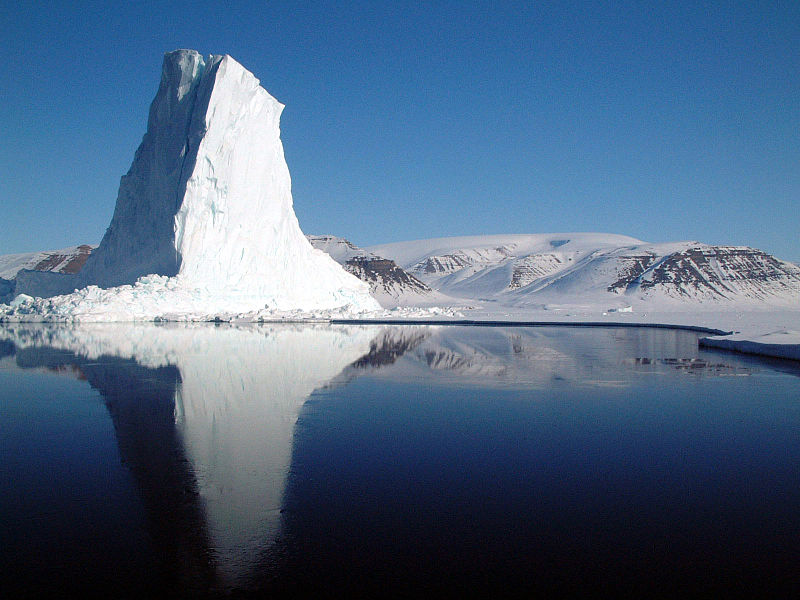
However, all this is really just me pointing at the tip of an emerging iceberg and saying: Wow, look at that! I hope that others will have time and expertise to explore the iceberg in more detail.
What are GIFs?
Most readers, especially of the younger sort, will know what GIFs are (although they may not agree on how they are pronounced ) and will have encountered them in their digital chats. But for those who haven’t come across them, here is a brief introduction (and I want to stress that I am new to this). GIFs are small moving pictures or animated computer images inserted into web-chats and discussions. Strangely enough, GIFs have been around almost exactly as long as I have been using computers ( 1987 ), but I still didn’t know about them! (That shows how I use computers: as glorified typewriters!) (and there are even protogifs from the 19th century).
According to Wikipedia: “The Graphics Interchange Format (better known by its acronym GIF; / ˈ dʒ ɪ f / or / ˈ ɡ ɪ f / ) is a bitmap image format that was introduced by CompuServe in 1987 and has since come into widespread usage … due to its wide support and portability. ” For a bit more history on this new medium, you can watch this video. Lets now jump forward to the present: “In 2012, the word ‘GIF’ was officially recognized as a verb as well as a noun, meaning ‘to create a GIF file’. The United States wing of the Oxford University Press voted it their word of the year, saying that GIFs have evolved into ‘a tool with serious applications including research and journalism’ “(wikipedia).
GIFs have rapidly become a popular medium of communication – and here, using Pinterest, you can find a nice selection of them. There seems to be a spectrum of GIFs that extends from GIFs as extended emoticons to the use of GIFs as an artform. (And, of course, there now is Vine, a six-second video app that’s owned by Twitter; there also are cinemagrams etc etc…. about which I know nothing! GIFs can be found on Tumblr and Pinterest and… lots of info can be found on Gizmodo, io9 and so on).
GIFs and science, technology, art communication
GIFs are popular in all forms of digital communication, so it is not astonishing that they are also being used in science, technology, arts communication. In one blog on ‘ awesome science GIFs ’, Amy Robinson calls “ chemical reaction GIFs, one of mankind’s finest internet creations”. The ‘ coolest science of 2013 ‘ is summarised in GIF form. Many scientific disciplines are now developing their own GIFs to encapsulate scientific methods, discoveries, objects and so on in succinct and relatively ‘simple’ and enjoyable ways, covering topics such as ‘ metagenomics ’ or bodies in orbit.
A large selection of science GIFs can be found on giphy (a GIF search engine and community platform) here. You can also now source them directly from Google Images which has added a subsection on animated images. These images then find their way into science/technology/art etc. communication/education videos, such as those produced by the PBS Idea Channel (to give only one example), which explores the connections between pop culture, technology and art (and also explains how they source GIFs). Many other science (etc) communication video channels use GIFs, and some communicators, such as Hank Green, for example, also host their own GIF blogs. I would love to hear from people using GIFs in science (etc) communication and public engagement!
GIFs are of course also used in climate change communication. Some examples can be found on giphy here. There are websites that use GIFs to summarise how climate change will affect the earth, or major cities, or to try to demonstrate the ‘ reality of climate change ‘, or illustrate how certain graphs can be interpreted by various people.
Other novel image-based conversation-structuring devices are hand gestures, such as these for example, which allow our usually embodied conversations to be imitated online. People engaged in digital conversations and chats can, of course, also use face-palm (and other) reaction GIFs, such as these. There are even some GIFs that can be used to ‘ replace conversation ’ altogehter (number 10 is my favourite and I use it, mentally, a lot!).
GIFs: one-way and two-way uses
As I said at the beginning, I have only just discovered GIFs and there will be lots of things to say about them that I haven’t said and other things that I have said will be wrong. On the one hand, GIFs seem to be used to educate, disseminate information and so on in a short and popular way in a rather one-way fashion. They are part of communication as information (science, climate change etc. ) transmission. On the other hand, GIFs and related image devices are used as what one may call interactional tools, even engagement tools, that moderate a two-way conversation about certain topics, inject it with humour and emotion. Over and above that, they may be used to perform various other functions including the construction of identities, communities and so on. In whatever way they are used, they are now part of popular culture and should be studied by communication researchers and those interested in online, digital, social media … science-society-culture interactions.
PS: Added on 27 January 2014
GIFs of birds in motion (HT @alicebell )
GIFs of engines (HT @joelanman)
PS added on 15 February 2014
A streamlined version of this post is now available at The Conversation
An interesting use of a GIF has been proposed by @theresphysics here.
Image: Iceberg at Baffin Bay, Wikimedia Commons
Title: The title is based on one of the most famous philosophy of language books: ‘ How to do things with words ‘ by John Law Austin, published in 1962.