Genomic characterisation of the University of Nottingham dairy herd
December 18, 2019, by Lexi Earl
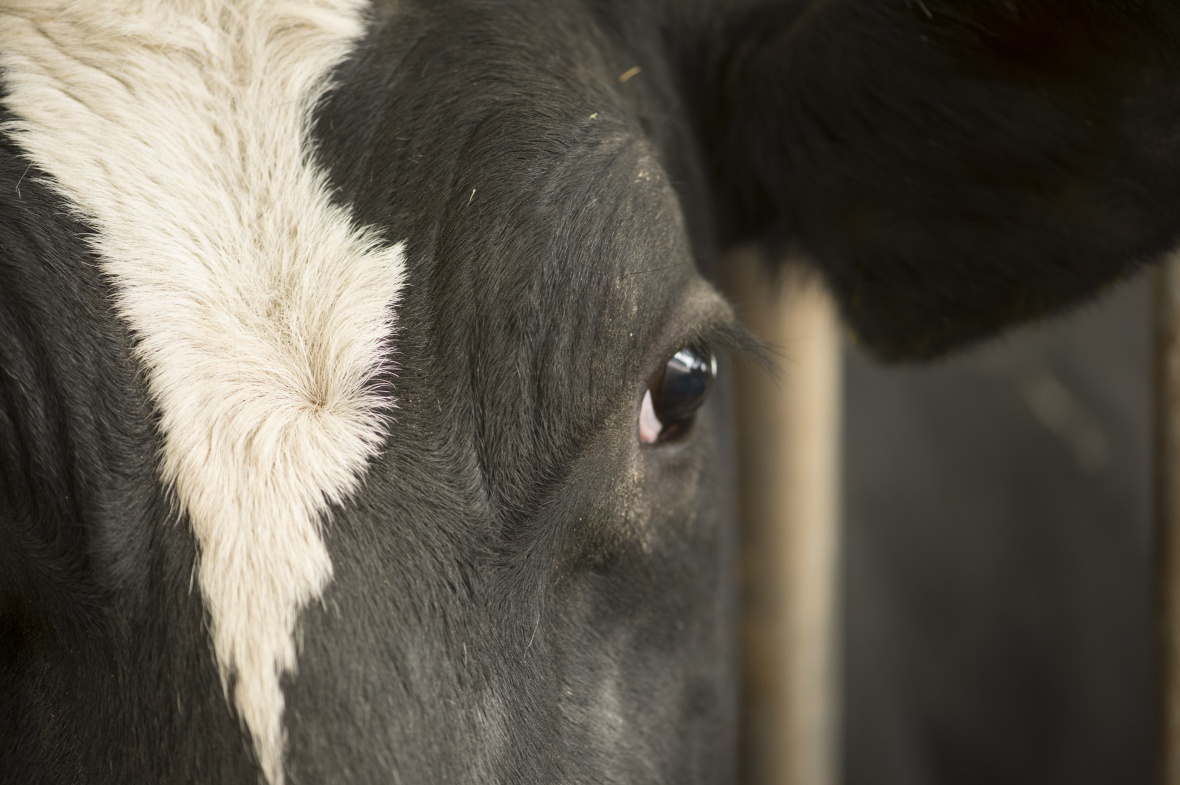
Genomic characterisation of the University of Nottingham dairy herd
This post is written by Dr Sarah Blott, Associate Professor in Animal Breeding and Genetics, in the School of Veterinary Medicine and Science.
Milk and dairy products are a significant source of nutrition in the human diet; the first evidence of dairy consumption dates back over 6,000 years, and today dairy farming is a global business. Europe is the leading producer of cow’s milk in the world (with 39% of the global export market), followed by the USA and India ( www. statista. com ). In 2017/18, over $45 billion of dairy products were exported globally, with the UK contributing £1.9 billion of exports derived from the 1.9 million cows in the national dairy herd.
Cow health and welfare are of primary importance to dairy farmers. In the UK, the Dairy Cattle Welfare Strategy aims to reduce lameness and mastitis, improve survival and growth rate of calves and young stock, and help farmers manage cow body condition and fertility. The environmental impact of farming cattle is also a concern. Cattle production is a source of greenhouse gases (GHG) and dairy production contributes about 3% of all anthropogenic GHG emissions ( www. fao. org ). In the face of climate change, cattle producers will be under strong pressure to reduce emissions. The University of Nottingham Centre for Dairy Science Innovation (CDSI) is a leading centre for dairy research. The state-of-the-art facility houses 360 cows, enabling detailed study of health, nutrition and welfare and facilitating the translation of research into practical implementation. The Future Food Beacon is funding the genomic characterisation of the CDSI herd, to help elucidate the understanding of fundamental biological processes such as host-pathogen interaction, fertility, soundness, metabolism, nutrition, behaviour, and environmental emissions. Understanding of these processes will be key to further innovations in improving health and welfare, and reducing environmental impact.
Genomic characterisation of the herd enables all genetic variants in the DNA of the cows to be identified and compared. Nanopore DNA sequencing (with the PromethION ) at the University of Nottingham sequencing facility has been used to generate whole genome sequence for two cows, which have several sisters and daughters within the herd. The nanopore technology gives ultra-long sequence reads, which has enabled de novo assembly of the two cow genomes by the School of Veterinary Medicine and Science Bioinformatics group to provide a representative ‘UK Dairy Cow Genome’. The remainder of the herd has been genotyped for 777,962 single nucleotide polymorphisms (SNPs) using the Illumina Bovine HD Genotyping BeadChip. By using the whole genome sequence to ‘fill in the gaps’ the genotyping data will be used to impute up to 27 million variants in the genome of each individual cow with 95% accuracy. This will ensure that the majority of causal variants in the genome are identified, and will increase the power of gene mapping analyses carried out on the herd.
The genomic characterisation of the CDSI herd will support several innovative research applications in the Ruminant Population Health group and the Pathogen Functional Genomics groups in the School of Veterinary Medicine and Science, and the Divisions of Nutrition and Animal Sciences in the School of Biosciences. These include investigating:

- host-pathogen genome to genome interactions, focusing on infection by the bacterium Streptococcus uberis, the leading and poorly controlled cause of clinical mastitis in the UK. Mastitis impacts on sustainability of the dairy industry through loss of milk production, inefficient use of resources, non-productive emission of greenhouse gases, reduction in the welfare of farmed animals and increased use of antimicrobials. The high-density genomic data which has been generated will be used in a host-pathogen genome-wide association study (GWAS) to identify regions of the cow genome which are associated with regions of the bacterial genome controlling the bacteria’s ability to colonise the mammary gland;
- the relationship between lameness and metabolism (fat deposition). Lameness is a significant issue in dairy herds around the world, in the UK the prevalence (based on mobility scoring) is between 25-37%. Morphological hoof traits, such as the thickness of the digital cushion, are known to influence susceptibility to non-infectious foot lesions and have a heritable basis. Previous studies have suggested links between hoof morphology and body condition, and differences in digital cushion thickness may be related to changes in fat metabolism. Analysis of the CDSI genome data will aim to identify genomic regions associated with digital cushion thickness and to estimate the genetic correlation with metabolic traits;
- the relationship between genetic variation, environment and fertility. Selection for high milk yield over the years has resulted in a decline in cow fertility. Several candidate genes for fertility have been identified by previous GWAS studies and it is known that environmental factors play an important role in moderating fertility. The CDSI data will be used to further investigate interactions between genetic variants and environmental factors affecting fertility;
- the interaction between the rumen microbiome and host genome. Variation in environmental emissions between cows arises through a combination of the rumen microbiome composition and genomic differences between the cows themselves. Understanding the nature of this combinatorial effect will be important in the quest to reduce greenhouse gas emissions from cattle production;
- inter-cow differences in milk composition. Fatty acid and protein percentage in milk are important traits in dairy production, as they influence the quality of products such as cheese and cream. The percentage of fatty acids in the milk is linked to metabolism and, potentially, disorders such as ketosis. Investigating correlations between milk composition and disease susceptibility will bring new insight into the competing demands made on dairy cow metabolism;
- the resilience and welfare of cows and calves, including studies of their behaviour, response to heat stress, longevity within the herd and resistance to respiratory disease.
The work will complement ongoing phenomic studies to identify novel traits measured using state-of-the-art sensors. Better understanding of the biological mechanisms underlying these traits will facilitate the development of new therapeutics and management strategies, leading to more sustainable approaches to global dairy farming.