Enhancing the writing process with technology: practical insights for teachers
March 27, 2025, by Rupert Knight

Enhancing the writing process with technology: practical insights for teachers
Initial reflection on the relationship between technology and the development of writing might have you thinking they are not natural soul mates. However, schools across Transform Trust have been integrating technology into the writing process and this offers a dynamic way to engage students, supporting each stage from idea generation to final publication. Trust Associate Headteachers, Phil Herd (Digital Lead) and Helen Fordham (Writing Lead) have worked together to develop a collegiate approach to ensure the effective integration of the two aspects in order to improve outcomes for children.
During a recent Primary Education Network session, examples of effective integration of digital tools to enrich the writing process were shared. This integration is guided by Ruben Puentedura’s SAMR model, which encourages using technology with purpose at each phase.
An overview of the Transform writing process
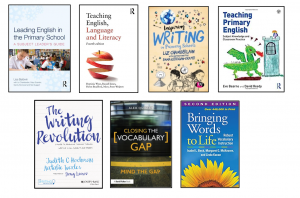
Our process is based on several pieces of research, such as the Education Endowment Foundation (EEF) work on literacy at KS1 and KS2 and Ofsted’s Research review series, as well as these books:
The process is a framework designed for primary education, offering a clear system to foster both creativity and technical writing skills among young learners and including the following stages to support every aspect of writing development:
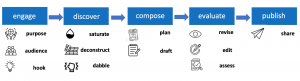
Engage: Purpose, audience, hook
Discover: Saturate, deconstruct, dabble
Compose: Plan and draft
Evaluate: Revise, edit, assess
Publish: Share
During the Engage phase, students’ interest is sparked, establishing a real or imaginative purpose for their writing. In the Discover stage, students learn from reading modelled examples, pull apart texts and experiment with sentence construction and grammatical techniques needed for the final piece of writing. During the Compose stage, students plan their discussions, making it easier to translate these ideas into writing, so they can later Evaluate and Publish.
The diagram illustrates how each phase of the Transform Writing Process enhances both the depth of engagement and the quality of students’ final work. By effectively combining these methods, teachers can foster a love for writing and raise writing standards across the curriculum.
The SAMR model
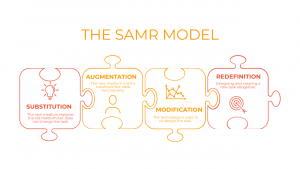
The SAMR model is a powerful framework that guides teachers in selecting the most effective tools for enhancing learning experiences and helps them consider how technology can be integrated into their lessons to achieve different levels of impact.
Image Credit: https: //www. edweek. gr/montelo-samr-enas-tropos-ensomatosis-tis-tehnologias-sti-mathisi/
Substitution: technology acts as a direct replacement for traditional tools without changing the task itself. For instance, using a word processor instead of pen and paper. In writing lessons, this might involve students typing their stories instead of handwriting them, which can be particularly useful for children who struggle with fine motor skills.
Augmentation: technology still replaces traditional methods but adds some functional improvement. For example, using spelling and grammar check features in a word processor to enhance writing quality helps students identify and correct errors independently. Another example is using text-to-speech functions, allowing students to hear their writing read back to them, which supports editing and refining their work.
Redefinition: teachers create entirely new tasks that were previously impossible. For example, students could use digital storytelling tools to create multimedia stories, incorporating images, audio, and video to enhance their written narratives.
By applying the SAMR model, teachers can make informed decisions about which technological tools will most effectively enhance their teaching objectives. It encourages educators to go beyond simple substitution and explore deeper levels of engagement and creativity, ultimately leading to richer learning experiences for students.
The importance of transcription and automaticity
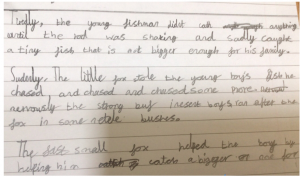
As Anabela Malpique and colleagues state, transcription, the physical act of writing, is a fundamental skill that underpins successful writing. Developing automaticity in transcription is crucial, as it allows students to write fluently without being bogged down by the mechanics of letter formation, spelling, or punctuation. When transcription becomes automatic, cognitive resources are freed up for higher-order aspects of writing, such as idea generation, organisation, and elaboration. This fluency is key to enabling students to express their thoughts effectively, making the writing process more seamless and enjoyable.
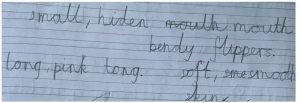
Kaligo, a handwriting application, is an excellent tool to support the development of transcription skills. It uses AI to provide real-time feedback, helping students improve their letter formation and handwriting fluency. By practising regularly with Kaligo, students can build automaticity more effectively, freeing up their working memory for higher-level aspects of writing.
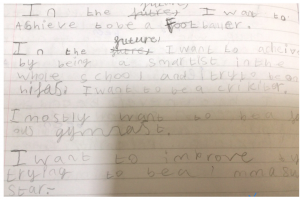
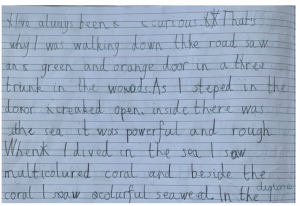
Impact was seen in only 6 weeks as shown by the two examples below.
Child 1 showing clear progress in the quality of their handwriting.
Child 2 showing progress in the quantity written in a similar time frame.
The Engage phase
Engaging writers from the start
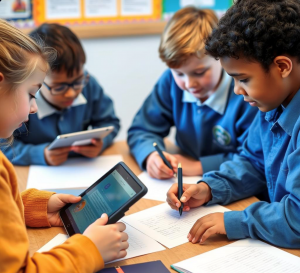
In the initial stage, the goal is to get students ‘on board’ with the writing task by establishing a clear purpose and intended audience. Students are more motivated when they know why they are writing and who will be reading their work. This phase involves ‘hooking’ students with imaginative, real-world contexts that build excitement and make the task feel meaningful.
Using digital tools to engage
Technology can help in defining purpose and audience while making the hook more interactive and memorable. Tools likeShowbieallow teachers to share student work with a broader audience, helping students write with the sense that their work will be seen and valued. Incorporating virtual reality (VR) can create immersive experiences that connect students to their topic in a way traditional tools cannot. For example, a VR environment related to their writing topic can make students feel like they are on location, sparking creativity and engagement.
The Discover phase
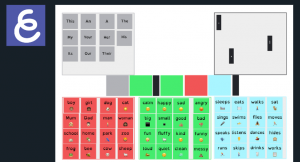
In the ‘Discover’ phase, students are immersed in high-quality texts that exemplify the purpose and structure of the writing task. This exposure allows them to absorb the language, themes, and organisation of similar writing and gives them the background knowledge to write confidently about the topic.
Using digital tools to discover
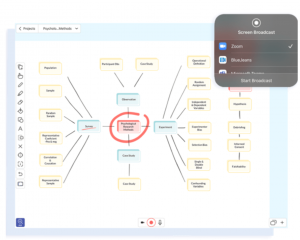
Using multimedia resources, such as videos, digital books or online meetings with experts, can make text exploration richer and more engaging. This phase often benefits fromdigital whiteboards or document-sharing platforms, where teachers can model analysis of texts and highlight key features interactively. These tools support collaborative learning, enabling students to annotate and discuss texts in real-time, making the deconstruction of model texts more accessible and engaging.
Image Credit: Created by Gencraft AI
Teachers can use ChatGPT to generate model texts that align with the writing conventions and features outlined in the curriculum. By providing specific prompts, teachers can create texts that demonstrate the desired structure, tone, and language features for different genres. These model texts can then be used for analysis, allowing students to deconstruct and discuss elements such as sentence structure, vocabulary use, and paragraph organisation. This approach not only provides students with relevant examples but also helps them understand the conventions they are expected to use in their own writing. Further, it speeds up the creation of these texts which affords the teachers time to think about how the text might be most effectively used.
Dabbling and experimenting
The ‘Dabble’ stage encourages students to experiment with ideas, vocabulary, and sentence structures. This phase is about playing with language before committing to a full draft. Drawing inspiration partly fromThe Writing Revolution, this is where students practise foundational writing activities that help them craft stronger, more cohesive sentences and paragraphs. For example:
Sentence expansion and combination: Students can expand simple sentences into more descriptive ones or combine multiple ideas into complex sentences. This practice helps them build confidence in manipulating syntax and expanding their ideas effectively.
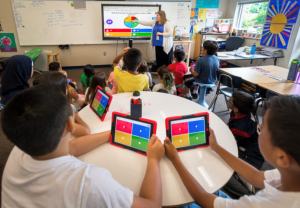
Digital tools to support: In the example below, Explain Everythingand other interactive whiteboard apps let students practise sentence structure and grammar visually, helping those with additional language needs. Students can experiment by moving words and phrases on the screen, experimenting with sentence combinations and expansions in an engaging way. Additionally, using collaborative documents likeGoogle Docs, students can practise these activities in pairs or small groups, sharing feedback and improving their writing together.
Image credit: Amy Hassall – Pear Tree Community Junior School
Because, but, so: Using ‘because’, ‘but’, and ‘so’ to develop a basic idea into more complex thoughts encourages depth in students’ writing. For example, if they start with ‘The character was sad’, they can elaborate with ‘The character was sad because he lost his pet’, or ‘The character was sad but…’, adding reasoning and building logical connections
Digital tools to support: Teachers can prepare these sentence openers on Keynote and three possible sentence endings. Children then use Magic Move to move the sentence ending to the correct sentence start. In our experience, children have found this more engaging and they are also more willing to have a go due to the ease in which it can be corrected.
The Compose phase
The ‘Compose’ phase is where students pull together their ideas, organising them into a coherent plan or outline. This phase emphasises the importance of structure and encourages students to build on what they’ve explored and experimented with so far. Teachers can share their thought process for planning their writing using apps like Explain Everything to record their modelling and explanations. Children can then rewatch the video when necessary.
Photo Credit: Explain Everything
Digital tools for planning and composition: PagesorShowbieoffer digital spaces for students to record their initial ideas and create outlines. Voice recording tools allow students to capture their spoken thoughts, which they can later review and build upon in their writing.
Quizzing: Socrative provides instant feedback, helping teachers assess whether students understand the features of a text type, so they can adjust support if needed before students begin drafting.
Image Credit: https: //dailytrust. com/software-pushing-textbooks-into-history-bill-gates/
Drafting and revising:
In the drafting stage, students develop their initial ideas into a complete piece of writing. Here, students focus on translating their plan into sentences and paragraphs, with a focus on maintaining flow, coherence, and voice. In the revision phase, they refine their draft by reordering sentences, expanding details, and rephrasing for clarity and impact.
The Evaluate phase
Digital tools for editing: Grammar-checking tools provide instant feedback and help students identify and correct common errors independently, reducing the time teachers spend on minor corrections. Self-editing is promoted through tools like built-in spell check on word processing apps, allowing students to focus on detail and precision before the final draft.
The Publish phase
In the final stage, students present their finished work to a broader audience. This is a rewarding phase where students can celebrate their progress and receive feedback from real readers. Authentic publishing opportunities give their work purpose, reinforcing their motivation and sense of achievement.
Sites like Google Sites allows for easy sharing of an entire classes work, as can be seen from this example from Sneinton C of E Primary School
This example from Parkdale Primary School shows one child’s informative video teaching his teachers how to use the Sketches App
Digital tools for sharing:
Publishing digitally, whether on a class website, blog, or even a private platform like Showbie, provides an authentic audience and purpose. When students see their work shared beyond the classroom, they gain confidence as writers and feel a sense of pride in their accomplishment. It also allows peers, parents, and other teachers to engage with their writing, creating a supportive, community-based feedback loop.
Conclusion
The key to using technology successfully is to consider whether it will be more or less effective than an alternative. Using the SAMR model as a guide, teachers can thoughtfully integrate digital tools at each stage of the writing process, transforming how students engage with and produce writing. By carefully selecting the right tool for each stage, teachers can create a writing journey that is supportive, engaging, and ultimately fulfilling.