Duckweed: plant for the future!
August 15, 2019, by Lexi Earl
Duckweed: plant for the future!
One of the wonderful things about science is the sense of exploration into the expanse of the unknown. Finding future food sources, particularly protein, outside of livestock, is becoming increasingly important, for both human and animal diets. It is easy, despite the myriad of possible research avenues, to become stuck down a single trajectory, chipping away at a single research area and making small but incremental advances. Sometimes it is necessary to step back, and explore a problem from an entirely different angle in order to make step-changing progress.
It is with this in mind that a group of Future Food Beacon researchers have begun new projects examining a very small plant with big potential impact: duckweed. What on earth is duckweed and what does it have to do with the future of food, we hear you ask? Let us explain…
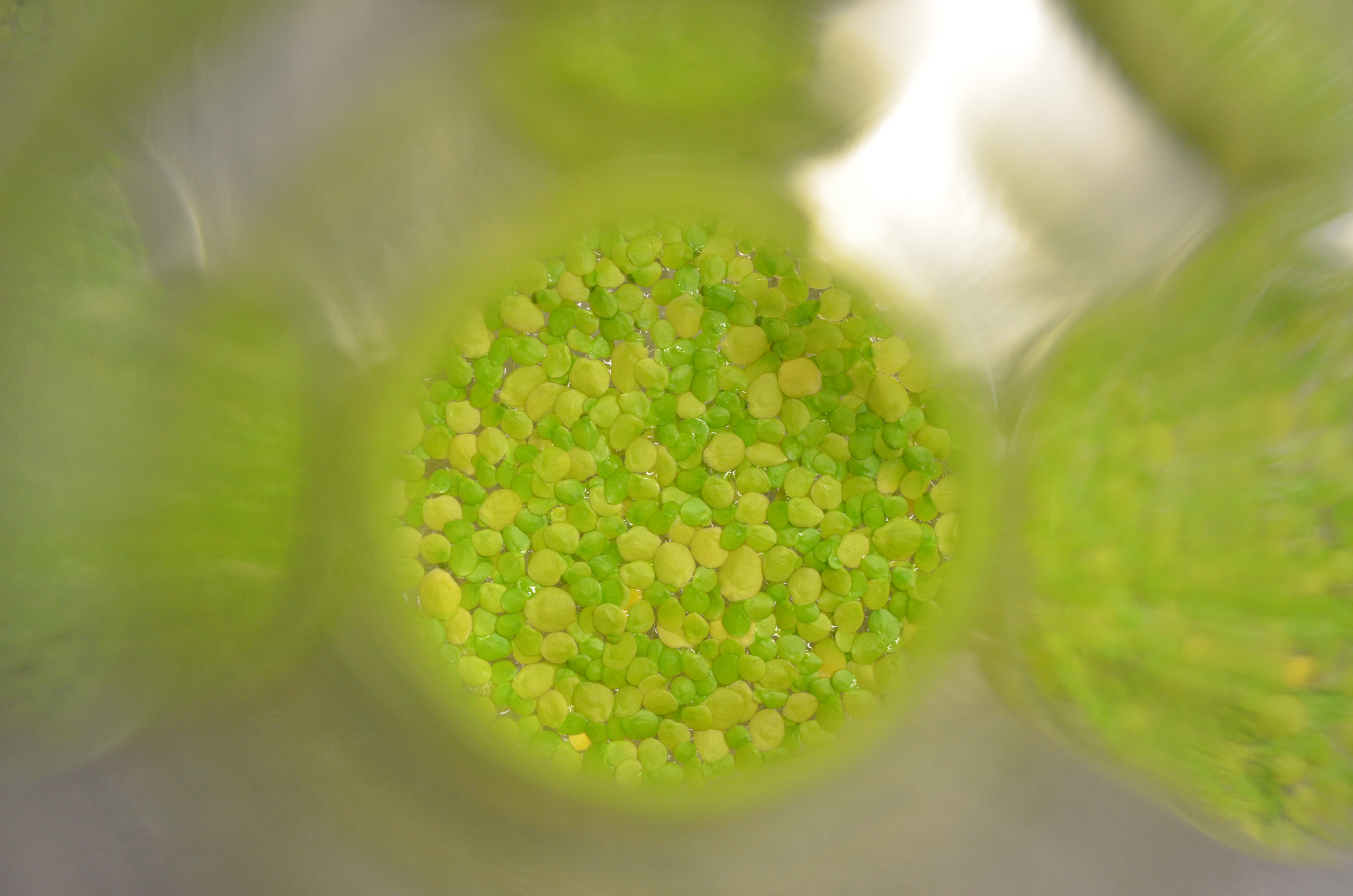
Duckweeds are small, floating aquatic plants. They are mostly found in still or slow-moving bodies of water (like your garden pond!). Duckweeds grow very rapidly, and reproduce clonally. They are able to absorb excess nutrients because they grow so quickly. These features mean that duckweeds are increasingly being used for a variety of applications, including biofuels, bioremediation (to clean up toxic sites), and as a protein source. Importantly, duckweeds are very high in protein – approximately 50% by weight—and while they are an appreciable part of human diets so far only in Southeast Asia, they hold massive potential for human consumption, animal feeds, and as a plant alternative to whey proteins.
Duckweeds can also be a great source of mineral nutrients. They possess the ability to accumulate very high quantities of different mineral nutrients such as iron, zinc, or copper, that are essential for good health. Malnutrition due to mineral deficiencies is a worldwide problem, particularly affecting children. Duckweeds therefore hold the potential to address this malnutrition issue.
Dr Britta Kuempers and Dr Randa Darwishare are going deeper into the potential translation of this to human diets. By examining the nutrient content available to humans after consumption rather than simply studying the total nutrient content, researchers are able to pinpoint which species might be best as a potential food source. This involves studying the effect of gut enzymes on duckweed, in lab conditions. The nutrient content after this simulated ‘food digestion’ will provide important information for future proteins.

Beyond the interest in natural ionomic variation and nutrient bioaccessibility above, duckweeds have also caught the interest of evolutionary biologists who study large scale morphological transitions. These plants may look simple, but they have evolved relatively recently from land plants. Other plants in the same family, such as the peace lily, have a body plan much more typical of an advanced plant. As duckweeds have adapted to the aquatic environment they have lost several key structures and, in some species, have evolved to be completely rootless. Dr Anthony Bishopp has recently obtained a grant from the Leverhulme Trust to investigate the evolution of rootlessness in duckweeds, and hopes that this research can inform evolutionary biologists more generally about how structures can be lost.
Duckweed is a small plant with a big, promising future.