Droughts and their effects on agriculture – An interview with Amit Kumar
October 23, 2020, by Andrew Edwards (Ed)
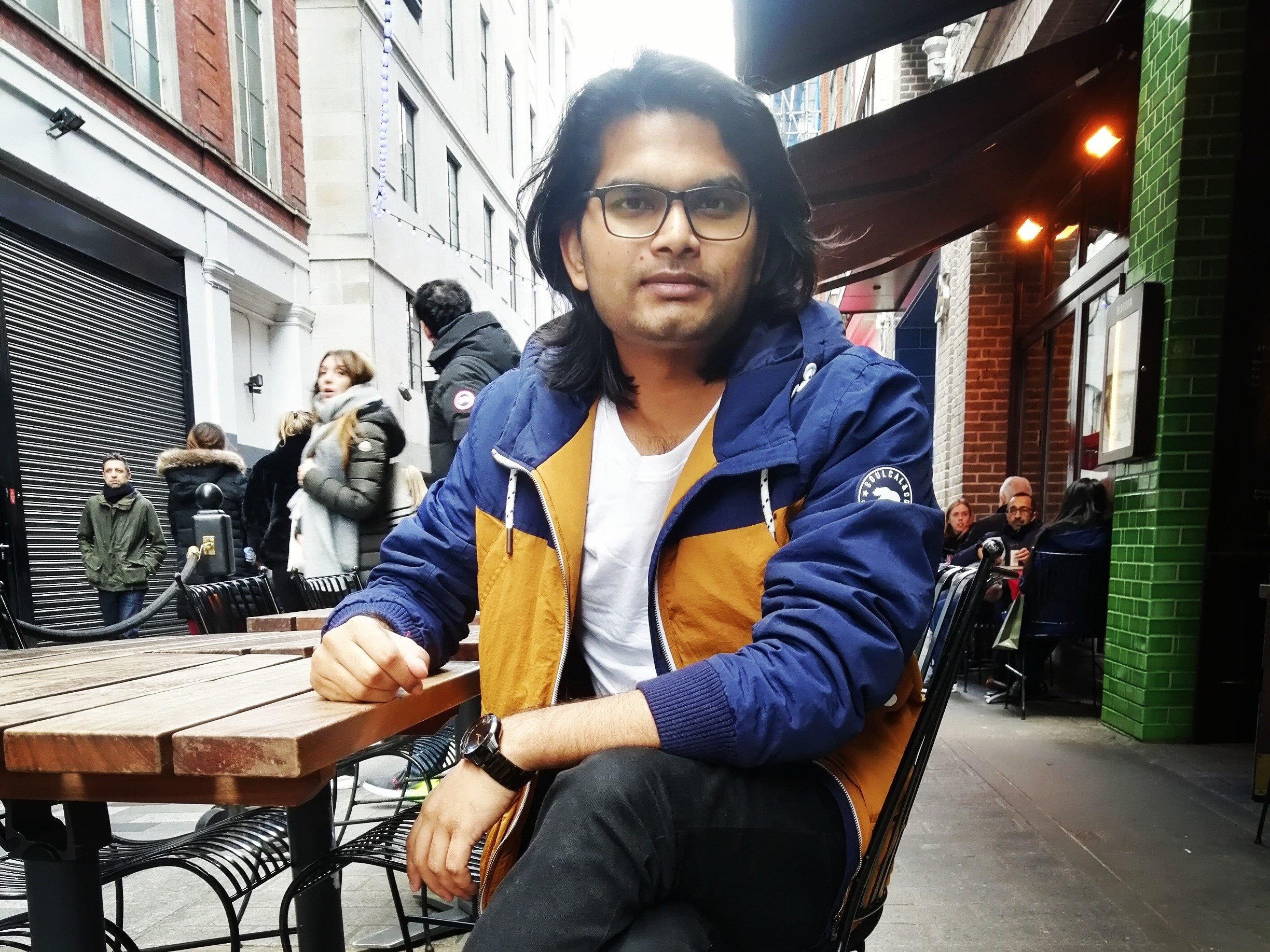
Droughts and their effects on agriculture – An interview with Amit Kumar
Amit Kumar is a PhD student on the Palaeobenchmarking Resilient Agricultural Systems (PalaeoRAS) project
Why did you decide to do a PhD? What were you doing before?

<span data-contrast="none"> </span><span data-contrast="none"> </span><span data-ccp-props='{"201341983":0,"335559739":160,"335559740":259}'> </span>
Before coming to the UK, I worked for the National Institute of Hydrology (NIH) in Roorkee (India) as a Senior Research Fellow for two years. NIH is a leading research institute working under the Ministry of Water Resources, Govt. of India.
Earlier, I had completed my Masters in Water Resources Engineering and my Bachelors degree in Civil Engineering.
What do you study? Why is it important?
<span data-ccp-props='{"201341983":0,"335559739":160,"335559740":259}'> </span>
My PhD focuses on investigating factors that influence drought propagation, from meteorological to hydrological drought. A meteorological drought is consistently less than normal rainfall in any given area. This has an effect on other water resources such as stream flows, lake levels or groundwater levels. Consistently less than normal levels for any of these water resources is referred to as a hydrological drought.
My study observes the effects of drought propagation on agriculture. This will help stakeholders and policymakers to manage agriculture in many ways and certainly has implications for food production. Every year, drought affects the livelihoods of a large number of people but, unlike other natural hazards, it is mostly under – reported due to the creeping nature of droughts. This study will show the global extent of these droughts.
How do you explain your research to ordinary people?
<span data-ccp-props='{"201341983":0,"335559739":160,"335559740":259}'> </span>
In layman’s terms, I am studying how, and to what extent, lesser rainfall in a particular area affects water cycle and agriculture in that area.
fbthdr
Why did you choose this particular PhD project?
<span data-ccp-props='{"201341983":0,"335559739":160,"335559740":259}'> </span>
With food security arising as a global problem, my interest in droughts and their implications for agriculture is timely. This project perfectly aligns with my research interests and gives me good exposure to other interdisciplinary topics.
How was your first year? Any highlights or successes?
<span data-ccp-props='{"201341983":0,"335559739":160,"335559740":259}'> </span>
I spent most of my time on my literature review and pre-processing datasets for drought analysis.
Has undertaking a PhD been different from other degrees you have done?
<span data-contrast="none"> </span><span data-ccp-props='{"201341983":0,"335559739":160,"335559740":259}'> </span>
Pursuing a PhD is completely different from any other degree where you have a set course and need to prepare for exams. A PhD is much livelier by comparison; one has to deal with problems hands on, shaping the analysis further.
How do you cope with the pressure of doing a PhD?
<span data-contrast="none"> </span><span data-ccp-props='{"201341983":0,"335559739":160,"335559740":259}'> </span>
One can easily face the pressure of doing a PhD. The only way I see is just to deal with one thing at time instead of worrying about each and every aspect of it and doing nothing. At some point in life, everybody has to approach their problems this way!