Comics and classics part two — Helots and Spartans
April 24, 2014, by Tara de Cozar
Comics and classics part two — Helots and Spartans
Comics writer Kieron Gillen spoke at the Classical Association annual conference, held at the University at the end of April. Prof Stephen Hodkinson was the historical consultant on his recent comics series Three. I’m writing a series of posts on their roundtable discussion ‘Story telling and historical authenticity in a visual medium: the comics series Three’. The original post is here.
Scripts and process
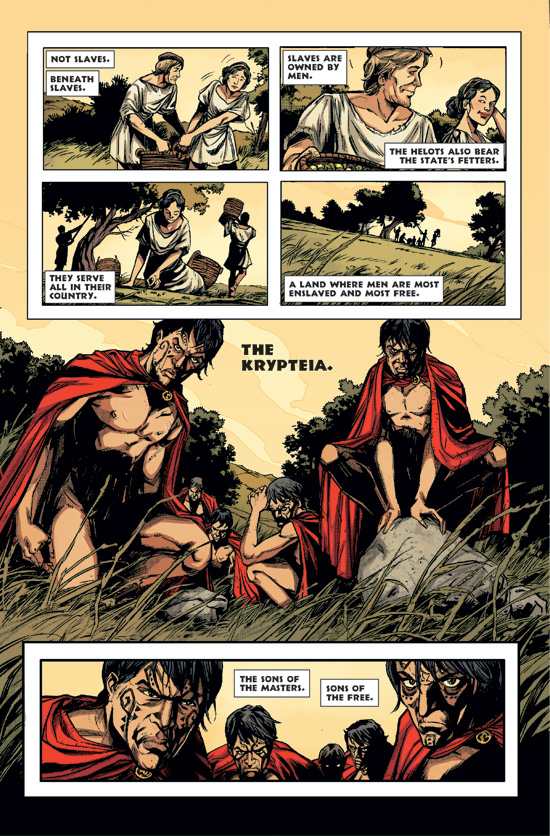
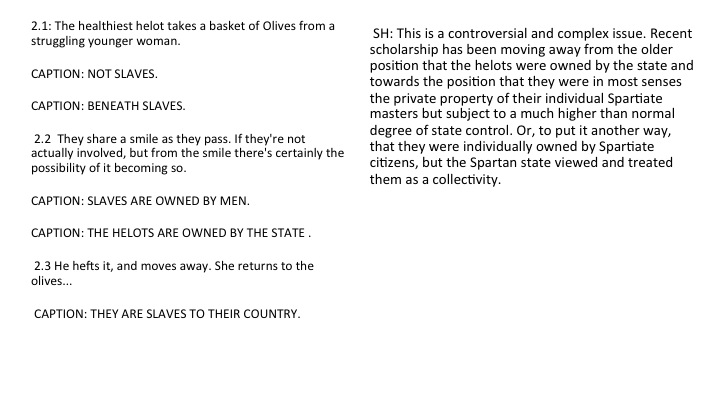
Kieron described a comics script as: “The world’s most anal screenplay. The scripts tended to balloon when I was talking about anything vaguely historical and trying to explain what was going on. And I wanted to make it acceptable to current academic discourse. ”
An example of the collaboration comes from one of the earliest pages in issue one, setting the scene for the the whole story and explaining the Helots’ relationship to the Spartans.
“Helots — owned by the state — that’s the pop history version, ” Kieron added. “I didn’t want to disrupt that for readers with that view. At the same time I don’t want to be wrong. ‘Also bears the state’s fetters’ was my shorthand version, which I was very happy with. It was a really lovely example of how the back and forth worked. ”
An audience member then asked if Three would’ve been a different comic if Stephen had been involved earlier in the process.
Kieron: “I think it would’ve definitely changed the nature of the beast in some ways. My process of researching and writing Three — the first draft was done before I’d even spoken to Stephen. It was more, “is this OK and how can I work around this enormous historic error I’ve made?” I’d gone through what I’d wanted in the very basic literature and ripped those chunks out. My problem is, if I’ve taken directly from Plutarch, my interpretation’s awful. And writers tend to go automatically to the largest possible expression of any statement. You’re not trying to moderate. When you read pop history articles they tend to go to the strongest statement. ”
I’ll post more on the discussion over the next few days.